
How many parents are afraid to homeschool because of the time they are afraid it will take? It can be daunting to face an entire day of academic study with two or three children, all of whom are on different levels. How can we simplify things? Is that even possible?
During my homeschooling days, I never spent the entire day teaching my children. Contrast that with being in a classroom all day, where I have also spent a good bit of time. It can be tiring to be in a classroom all day long. Homeschooling was so much easier. We spent half a day doing our work and then we were done. Our schedule was simple to follow. And there was no busywork. And even though my children were different ages and in different grades, I did not combine them for any subjects. So how did we do it?
When I began homeschooling my oldest daughter, who was in first grade when we began, I came across some information that was very helpful regarding time management and scheduling. About that time, I read an article about a woman who homeschooled (all ten!) of her children, and she accomplished this herculean task while teaching them for only three hours a day. Each child was working separately at a different grade level, and she did not combine any of the levels, yet each day they were done by noon. And they were using a rigorous curriculum, such that her children were able to move into a well-regarded high school program as well as pursue an undergraduate degree as well as a master’s degree after finishing their curriculum at home.
How did she accomplish this? She simply gathered her children around the dining room table each weekday and had them work three hours each day through their curriculum. She continued this schedule year-round, and the result was that they made steady – and rapid – progress.
Half-Day School
So I decided that’s what I would do. I bought some curriculum and followed it with my daughter, and we did schoolwork for about three hours a day, until lunchtime. We were fresh in the mornings, and three hours was the perfect amount of time. My daughter had the afternoons to play, and I had the afternoons to pursue other interests. We chose not to work all year round but rather to follow a traditional summer break, as the summers gave us time to rest and enjoy summer pleasures.
A couple of years into our homeschooling journey, I began using a curriculum which came in a box and included all books and supplies for a year. (This curriculum came from Calvert School, which no longer provides homeschool curriculum.) It included the most wonderful manual which provided detailed instructions for teaching, as well as a suggested schedule for each day. The schedule for Kindergarten – 3rd grade began each day at 9:00 and ended by 12:30. The 4th – 8th grades ended by 1:15. Following this curriculum, it was easy to begin each day at 9:00 and be done by lunchtime, saving the afternoon for more creative activities my children could do on their own.
After using this schedule for a while, I decided that a short homeschool day was the best philosophy. We had no trouble getting everything done, and the short days prevented burnout for me as well as for my children. Even after I began putting together my own curriculum and planning our schedule myself, I continued to be a firm believer in this philosophy. It simplified our lives immensely.
As our children entered the late elementary and middle school years, their work sometimes took them a little longer – maybe until 1:00 or 1:30 – but they were working more independently at that point, and they were still able to complete their work in no more than 4 hours a day. We continued to be able to use our afternoons for music lessons and music practice, activities with local homeschool groups, or just building forts in the back yard.
How was it possible to get everything done in three to four hours a day? And how did this schedule simplify our lives?
No Busywork
First, there was no busywork. Instead of having students write answers to questions after reading literature or history, the Calvert curriculum would often just have students answer questions orally. Or perhaps the child would be asked to narrate the entire chapter orally – to tell everything that had happened in his or her own words. Occasionally, the child would be asked to write brief answers as practice, but writing was generally saved for the specific subject block called “writing” or “composition.” At that time, students would often be asked to write about the literature, history, or science they had read. This more streamlined approach allowed students to compose sentences and paragraphs in an organized manner while writing about what they had learned, yet eliminated unnecessary “busywork,” which saved time.
In school, most work must be done in writing in order for the teacher to be able to ascertain whether the students have truly read or learned the material, as it is difficult to tell when questioning an entire class orally. At home, we were able to review and discuss orally much material that might have had to be written had my children been in school.
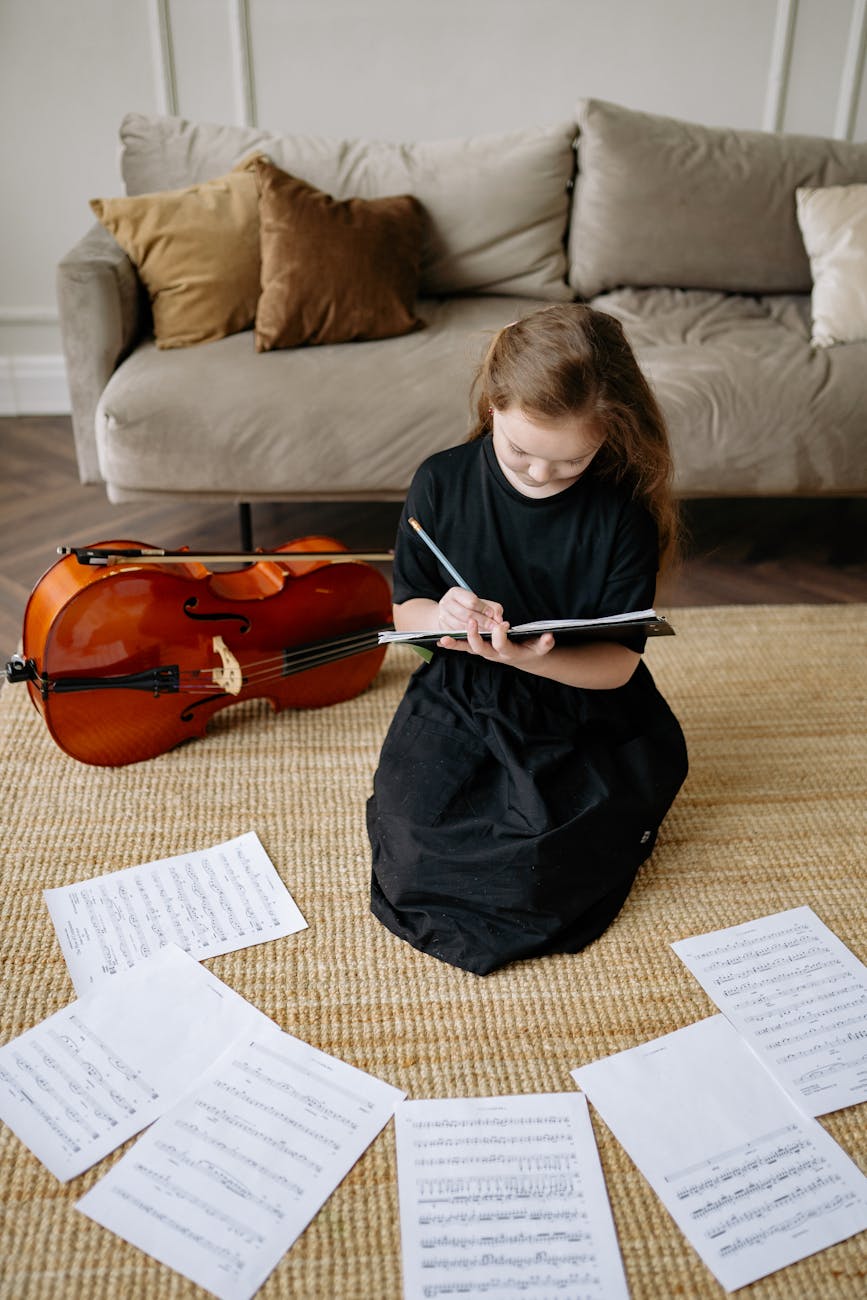
No Wasted Time
As I mentioned above, I decided that short days were a priority. I needed time to pursue my own interests, and so did my children. Eliminating busywork was a big help in the pursuit of this goal. We also, just by the nature of being at home rather than at school, were able to eliminate some timewasters. For example, because we were at home and there weren’t 20 or 25 of us, we didn’t have to spend time lining up to go to the bathroom or recess or lunch. We didn’t have to line up at all! If someone needed to burn off some energy, that child could take a run around the house or go do some jumping jacks, but it wasn’t something that disrupted the entire class.
Transitions took basically no time. I worked with the younger children individually, and the older ones each worked through their assignments on an index card in whatever order they chose, and then checked them off as they finished. They would bring their work to me and have me check it, but that too took very little time, as I just had one paper to check at a time. Tutoring a few children at the same time is much less time-consuming than trying to corral an entire class and keep their attention. We had minimal disruptions and were able to work consistently on a daily basis.
Core Subjects Daily; Alternating Others
We didn’t do every subject every day. More essential subjects, or subjects that required daily practice, were covered each day – reading, arithmetic, and spelling, for example, but others were covered only two or three days a week. For example, grammar alternated with composition, science alternated with history, and poetry alternated with art appreciation, art, and music. This type of schedule shortened our days.
See below for a sample 4th grade schedule:
| Time | Day 1 | Day 2 | Day 3 | Day 4 | Day 5 |
| 9:00-9:45 | Math | Math | Math | Math | Math |
| 9:45-10:00 | Spelling | Spelling | Spelling | Spelling | Spelling |
| 10:00-10:30 | Reading | Reading | Reading | Reading | Reading |
| 10:30-11:00 | History | Science | History | Science | History |
| 11:00-11:30 | Writing | Grammar | Writing | Grammar | Writing |
| 11:30-12:00 | Art Appreciation | Poetry | Geography | Music | Art |
| 12:00-12:15 | Extra time | Extra time | Extra time | Extra time | Extra time |
I prioritized our work, so that reading and math were completed daily and were never skipped. Somewhere along the line, I met some homeschoolers who didn’t get to their math every day, but rather just every now and then, and I went into shock. I vowed that that would never happen to us. We might on occasion be interrupted or have to miss part of our school day for some reason, but we always did reading and math. Those subjects are foundational and therefore were of prime importance, in my mind. In the first place, if you can read, you can do almost anything, and if you can’t read, you can’t even do math. In the second place, if you get behind in math, it is hard to catch up, and because it is cumulative and requires constant practice, it is essential to do math every day. So we never missed reading and math, and we could easily squeeze in the lessons in other subjects that we may have missed.
Focused Work
We stayed focused so as not to waste time. It is easy for children to waste time and not get their work done, which can end up turning a short day into a very long one. I never had much trouble with that, but if I had a child who was dawdling, I would sometimes use a timer as a “See if You Can Beat the Timer” game to encourage the dawdler. Also, as my children got older, I began writing their assignments on index cards so that they could pick the order they wanted to follow and check each subject off themselves. They liked doing that and I think it helped them to move along in their work.
Knowing that a homeschool day can be completed in three to four hours can be liberating for many homeschool moms who are afraid that their entire day will be spent working with their children on academics. Eliminating busywork, scheduling carefully, and working consistently in a focused manner can go a long way towards creating a positive homeschool environment.

