
Before wading into a discussion about curriculum, I would like to talk about why anyone would be interested in pursuing classical education in the first place. And what in the world do we mean by “classical” when it comes to education? What is classical Christian education? Does virtue have anything to do with it?
One of the main reasons I was drawn to classical education was its emphasis on virtue. We can talk later about exactly what classical education is, but if we talk about virtue, we will understand classical education better.
The Transcendental Virtues
In my first post on classical education, I mentioned that I was looking for a certain “flavor” in the type of education that I wanted to give my children. Since opinions differ about the exact definition of classical education, I will just begin by telling you what I think of when I think about classical education. I wanted my children to have an education that instilled in them a love for the good, the true, and the beautiful – what I have now learned are considered the transcendental virtues. Traditionally, this type of education was called a classical education and focused on the history and culture of Western Civilization, which was the civilization which developed around the Mediterranean Sea – the civilization of the Greeks and the Romans. Why was this civilization so important? Because this was the culture in which God prepared the world for the coming of Christ and the culture in which Christianity spread after Christ came. Children heard and read the stories of the ancient Greeks and Romans, whose cultures emphasized virtue, even though they were pagan. They learned about the birth, death, and resurrection of Christ, the spread of Christianity throughout the Roman Empire, and the fulfillment of goodness, truth, and beauty in Christ, who is the Truth. They were exposed to stories of heroism and courage as they grew up, and these stories helped children to internalize the virtues. These “classic” stories were just part of a typical education.
All of this is not exactly a definition of classical education, but it leads back to my first question: Why would anyone be interested in pursuing a classical education? Why would parents want this type of education for their children? One of the main reasons is that this type of education has historically focused on the transmission of virtue. And that is my question for today: How can we teach virtue? And how does a classical education help us in this pursuit?
We Must Teach Children to Love Virtue
Teaching virtue is not the same as teaching children the difference between right and wrong. We need to teach children that some things are right and others are wrong, but we can’t stop there. We must teach them to love virtue. We need to figure out how to help them to want to do what is right, even to their own hurt (even if doing what is right results in their own suffering). They need to internalize virtues such as courage and heroism. And one of the best ways of communicating virtue is by giving our children heroes – whether from history or from legends or fairy tales. Classical educators have known for years that if children are given the right stories to read, that they will identify with the hero and internalize the values of that hero. And in the literature of Western Civilization, which is based on Christianity, the hero is typically a Christ-figure.
This idea of finding heroes in literature has been around for a long time. When I had a son, I started looking for ideas for educating him (since I had never been a boy and didn’t think I knew much about them). In my reading, I came across the idea that reading the right stories to a boy when he is young and giving him the right stories to read as he gets older was one of the best ways of teaching virtue. So I set out to find some of those stories for my son. In a future post, I will list some of the books that I gave him to read over the years.
I had to work hard to find good books for my son to read since I had spent my childhood reading books that were geared more towards girls. However, once I started finding books for him, I found that there was a good bit of overlap, and I thoroughly enjoyed the books that I found for my son.
Fairy Tales and Mighty Men
Please note that as an Amazon Associate, I earn from qualifying purchases made through any of my amazon links.
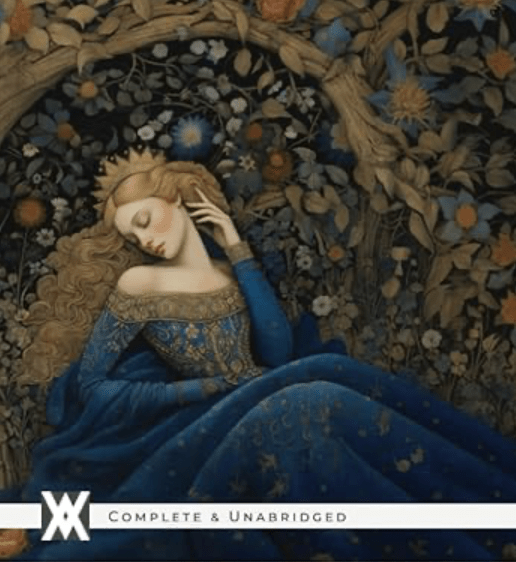
Both Tolkien and Chesterton have written essays on the importance of fairy tales. When I was a child, I found the Name That Color fairy books in my elementary school library and read them all (until they ran out of colors). I read The Blue Fairy Book, The Red Fairy Book, The Pink Fairy Book, The Green Fairy Book, and on down the line. I loved those stories. Fairy tales are actually a wonderful way for children to find heroes. As a result of identifying with the heroes (or heroines) in the stories, they want to emulate their virtues; I know I did. I went through my childhood imagining that I was a princess in a fairy tale, but I had learned from fairy tales that princesses had to behave in a certain way, so I (at times) tried to behave as a princess should.
Calvert School, which I discussed in my last post, used several books which taught children about heroes from classic literature. They even had a book called Mighty Men, which was used in the 4th grade course. I remember that some of the “mighty men” were not even men! One was actually Queen Esther, whose story is told in the Bible, and who was quite the heroine. Her famous line, “for such a time as this,” has inspired courage in many, both men and women.
Knowledge without Virtue Can Be Dangerous
These are just a few examples of how children find heroes by reading the right stories. An education purely for the sake of knowledge is incomplete. In fact, knowledge without virtue can be dangerous. Think about the world wars we have experienced and the ways that men – men with great knowledge but without virtue – used that knowledge to perpetuate great evils. Education is about more than conveying knowledge. It must also be about instilling virtue, and a classical Christian education is uniquely suited to that end. We don’t want to bring up children who are given knowledge without virtue, but at the same time, we shouldn’t try to teach virtue without knowledge. I’m not sure that is even possible. A truly educated person is one who has both.
 Ancient & New