The Ancient Greeks

LATEST STORIES

The Peloponnesian Wars

The Peloponnesian Wars (431-404 BC)

The ancient Greeks were a little bit like you and your brother and sister (or your best friend). They didn’t always get along. One time the Greeks in Athens and the Greeks in Sparta got mad at each other about something that seemed very important at the time. So they went to war. And they didn’t fight just one war. They fought two of them! Can you guess how long these wars lasted? 27 years!

These wars were called the Peloponnesian Wars because they were fought in the part of Greece called the Peloponnesus. It is easier to say if you break it up into two words: Pelopon Nesus.

The Spartans were better at fighting on land, and the Athenians were better at fighting on the sea, because Athens governed many islands which paid “tribute” or taxes, to Athens. But Sparta had to keep stopping to check on their slaves, and Athens had an outbreak of the plague which killed thousands of people, including Pericles, who had been the most important leader of Athens during its Golden Age.

Then a man named Lysander became the new Spartan general. Lysander figured out a way to defeat the Athenian navy and actually won a naval victory against the Athenians. Over 150 Athenian ships were destroyed in this battle, causing Athens to surrender to Sparta.

A man named Thucydides (Thoo-sid-i-dees), who was a general in the Athenian army, wrote a book about the Peloponnesian Wars called The History of the Peloponnesian War. His book is the main reason we know what happened. After Sparta defeated Athens, Greece was never the same. As a result, a man named Alexander was able to conquer Greece. We will talk about him later.
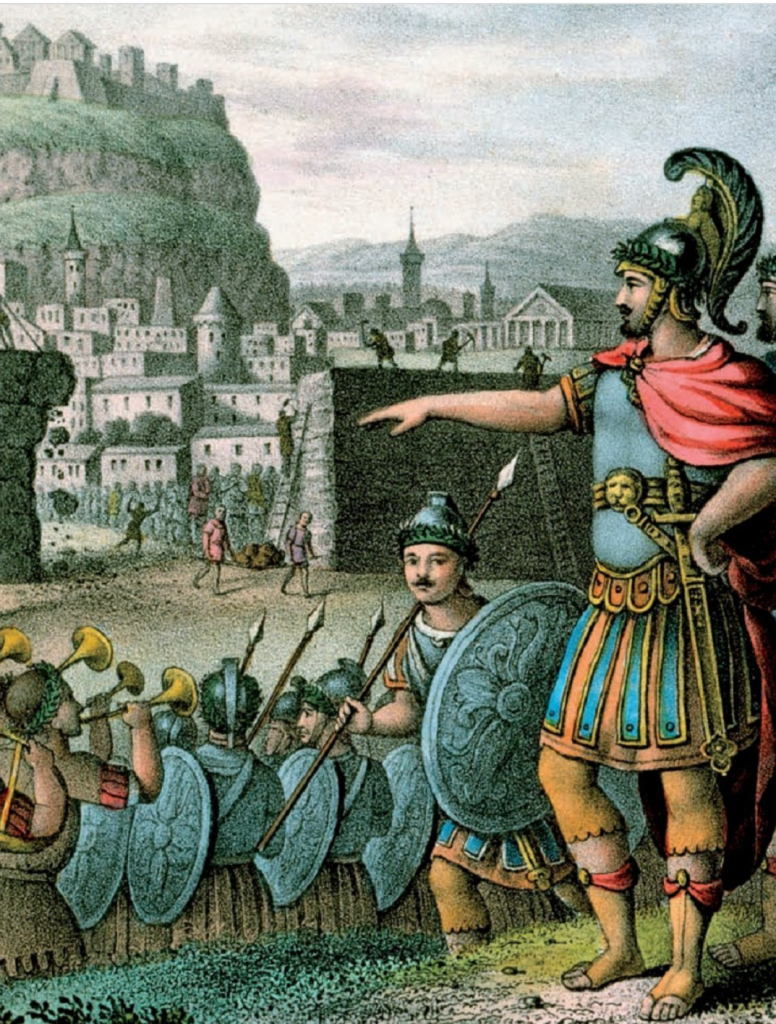

Lysander outside the walls of Athens; 19th century lithograph

I plan to add a story of the week below, suitable for all ages, so that we can learn the history of the world together, something which is essential for a classical education.

How to Teach Reading

Whether or not you are drawn to classical education, your child needs to know how to read. My daughter told me the other day that she thought that two of her children were not good readers because they had not received intensive phonics instruction at their school, but her third child, who did receive intensive phonics instruction, was an excellent reader. It is unnecessary for children to be handicapped with poor reading instruction, because the process of teaching reading is a simple one. Whether you homeschool your child or whether your child attends school, you can teach your child to read yourself in just a few minutes a day, thereby ensuring that your child does not fall through the cracks. To your child, it will be like a game. Many years ago, the book Why Johnny Can’t Read was released, in which the author encouraged parents to teach their child to read themselves before their child went to school, because one never knows what method of reading is being taught. (I also think that one never knows whether your child is going to be daydreaming through the reading lesson that day!)

So I decided to make a video which gives my simple method of teaching reading. Watch it below, and then take all the time you need to teach your child how to read. Turn it into a game!

See the link for the first set of Bob Books mentioned in the video. I loved them, my children, loved them, and my students loved them!

This page contains affiliate links. If you choose to make a purchase after clicking a link, I may receive a commission at no additional cost to you. (And as an Amazon Associate, I earn from qualifying purchases made through any of my amazon links.)

My Life vs. Their (My Children’s) Lives

I popped over to my daughter’s house yesterday afternoon because my granddaughter (who is 7 years old) called me wanting to know how to sign in to “her phone” (my old phone). What was my daughter, who incidentally works full-time and has four children, doing when I arrived? She was going over my grandson’s schoolwork with him. He is in 5th grade, and she was helping him prepare for a grammar test and begin work for a research paper, in addition to reviewing his history and science. She also had to leave and do her grocery shopping for the week.

I helped my grandson with his grammar (I am kind of an expert at grammar) and then took three of the children to my house while my daughter did her grocery shopping. This morning, I started thinking about the fact that every time I go over to my daughter’s house, she is engaged in something productive – preparing a meal, washing the clothes, cleaning out her garage, organizing the clothes, etc. And on top of all that, she works during the week and spends a couple of hours each day dropping the children off at their various schools and picking them up. Her work is never-ending, and I have great admiration for her.

My life was so much easier when I was bringing up my children. I sent my oldest to kindergarten, but after that, I decided to homeschool her. Four more children followed, and I homeschooled them all for varying amounts of time. I loved homeschooling – loved researching materials, creating schedules, working with my children, and I loved the flexibility. I think my children benefited also, as they have told me that I taught them how to think. They were able to pursue their own interests in more depth and had more free time because they weren’t in school all day. And one of the nicest things about it is that I did not have to spend my time driving children to school or picking them up. I did not have an outside career or job for years. Life was simple and I loved it. But my now-grown children have their own interests and life plans, and they are all doing an excellent job rearing their children in the way that works best for their families. I am in awe of them, but I am so grateful that I was able to be at home with my children and educate them.