Liberal Arts: An Education for Life, Not Just a Job

When my oldest daughter went to college, my father just could not understand why she was enrolled in a class called Women’s Studies. Apparently, Women’s Studies was one of the courses under the same block as Western Civilization, and everyone was required to take at least one course in that block. She explained that she had tried to sign up for an actual Western Civilization class, but it was full, so she had to choose another class, and Women’s Studies was open. My father could not understand such an odd thing. In his day, everybody took Western Civilization. No exceptions. In fact, everyone took mostly the same courses for the first two years of college, because back then, everyone received a liberal arts education. When I went to college, the same thing was pretty much true. We all took many of the same classes, and everyone still had to sign up for Western Civilization. But by the time my daughter entered college, things had changed.  

Not too many years ago, most colleges and universities provided something called a liberal arts education. Even my father, who eventually majored in business, received a liberal arts education. Years after he graduated from college, he still had many of the literature books he had read while enrolled in his collegiate studies – novels like Gulliver’s TravelsJane EyreWuthering Heights, Longfellow’s poetry, and others. He had become attached to those books; the lessons they taught and the beauty of the language they used had made their way into his thinking. And he passed them on to me; I still have some of them and treasure them because they were my father’s. 

But those books were part of the liberal arts education he received. And plenty of students today study the same literature, whether in high school or college. The difference is that it is possible to graduate from college today having not taken a single course in Western Civilization or a literature course that includes traditional literary classics. This situation has come about because of the demise of the liberal arts. By the way, I asked my daughter one time what they discussed in her Women’s Studies course. Her response was, “We talked about totally inappropriate things all semester.” Hmmm.

What is a liberal arts education, anyway? And why does it matter? 

The term liberal arts, including the division of the arts into the Trivium and the Quadrivium, dates from the Middle Ages. In classical education, the liberal arts were the branches of knowledge that started young people on their lifelong journey of learning. The goal of a classical education was to be an Educated Person. And the liberal arts were what enabled people to be educated. Whether students ended up plowing fields as a farmer, caring for patients as a physician, or working as an engineer, a liberal arts education would teach them how to live and enable them to rise above their environment, resulting in true freedom (Joseph 5). After all, the word liberal comes from the Latin word liber, meaning “free.” 

The difference between a liberal arts education and the more practical type of education that most colleges now emphasize can be found in their goals. A liberal arts education, which was not completed until graduation from college, included the Trivium and the Quadrivium, and emphasized broad reading across the humanities and other disciplines, critical thinking, and clear, effective communication. The end goal was internal for the student and was aimed at developing his own soul through the richness of his studies (Joseph 4). 

Practical studies, or the utilitarian arts, were also important, but their focus was different, because these arts enabled people to serve others and to earn a living (Joseph 5). And for sure, people need to be able to earn a living, but it was commonly believed that those who have developed their own minds and souls through a liberal education are better equipped “to serve others in a professional or other capacity” (Joseph 4).

The Liberal Arts Teach One How To Live

Historically, most colleges and universities offered a liberal arts education, not because earning a living was considered to be unimportant, but because, as Sister Miriam Joseph says in The Trivium, “the liberal arts…teach one how to live…they enable a person to rise above his material environment to live an intellectual, a rational, and therefore a free life in gaining truth. Jesus Christ said, ‘You shall know the truth, and the truth shall make you free’” (John 8:32) (5). 

There are still a few liberal arts colleges left out there, but even at a state school, it is possible to put together one’s own classics/liberal arts program if the university offers enough options. And with the increase in the number of students enrolled in classical education these days, we may be seeing more and more students coming out of high school already having begun their journey towards the liberal arts.

Joseph, Sister Miriam, C.S.C., Ph.D. The Trivium: The Liberal Arts of Logic, Grammar, and Rhetoric. Paul Dry Books, Inc., 1937, 2002. 

Enhancing Classical Education with Art Appreciation

One of the things that should be included in an enriched classical education is art appreciation. Exposing children to beautiful art is a wonderful way to put their souls in touch with truth, beauty, and goodness. And art knows no age limitations; young children, teenagers, and adults can all enjoy art together. I loved the fact that the original curriculum I chose for my children included art appreciation and even art history for older children. What are some ways that we can include art appreciation in a classical education?

In this post, I have listed a few ways we can easily share beautiful art with children. These are ideas we can use for all ages, so that young children as well as parents and teachers can enjoy the same art together.

Art Prints

As I was educating my children, I came across the ideas of Charlotte Mason, a British educator who had a gentle approach to classical education and believed in enriching children’s lives with the best art, music, and literature. She advocated using art prints with children, allowing the children to spend some time each week observing a painting, perhaps even attempting to imitate it by making their own copy. 

This method is easy to reproduce either in the classroom or with one’s own children and takes very little time. Some teachers follow this approach with a dedicated “Art of the Week” wall. And Memoria Press, for example, publishes a set of art prints for the lower grades with discussion suggestions for each print. They sell large art prints for a classroom wall as well as small prints so that each child can have his or her own set to hold, if desired. Children love to hold the art prints and pass them around, and they especially love to choose their favorites.

In my classroom of young children, we would sometimes make a craft that related to our art for that week, so one week, everyone painted a bowl of apples in honor of Van Gogh’s Still Life with Apples. Another time, we practiced our version of pointillism because we were learning about the artist who invented pointillism. 

Charlotte Mason recommended spending longer than a week on each art print, and I would agree with her. You can easily buy a set of art prints and use them for two years, stretching them out a little longer. And you are welcome to take the same set and repeat them later with older children, as the selection of art is completely arbitrary and totally up to you. The same art was created to be enjoyed by all ages, and we are free to pick and choose what we believe would be best for a particular class or child. Children love familiarity and enjoy seeing their favorites over and over.

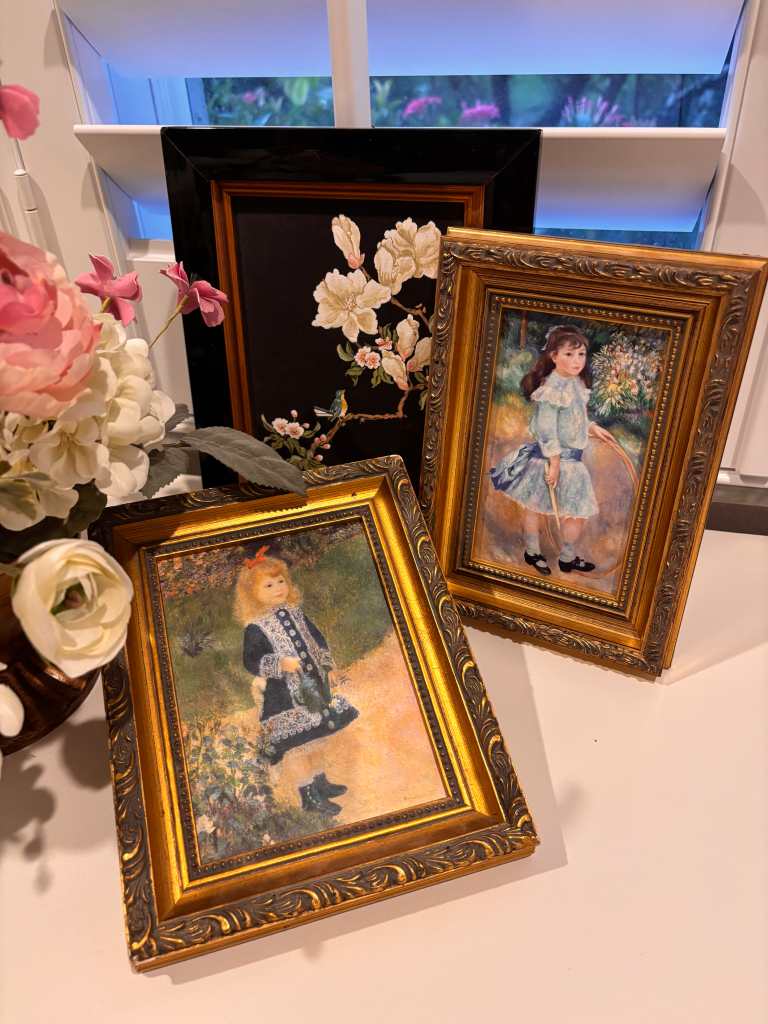
I used to hang framed art prints on my wall at home, and when my children saw the same prints in a book, they would get excited because they knew we had that same painting on our wall at home!

Integrating Art Prints into Other Subjects 

As children grow older, art appreciation can even be integrated into history and literature. The Calvert 4th grade world history course included a set of art prints that correlated with many major events and people of world history. When children read about ancient Egypt, they would look at a photo of Nefertiti’s sculpture or a print of ancient Egyptian hieroglyphics. When learning about the Middle Ages, they would enjoy a print of the Sistine Madonna as well as Da Vinci’s The Last Supper; and they would be introduced to John Trumbull’s Signing the Declaration of Independence once they arrived at American history.

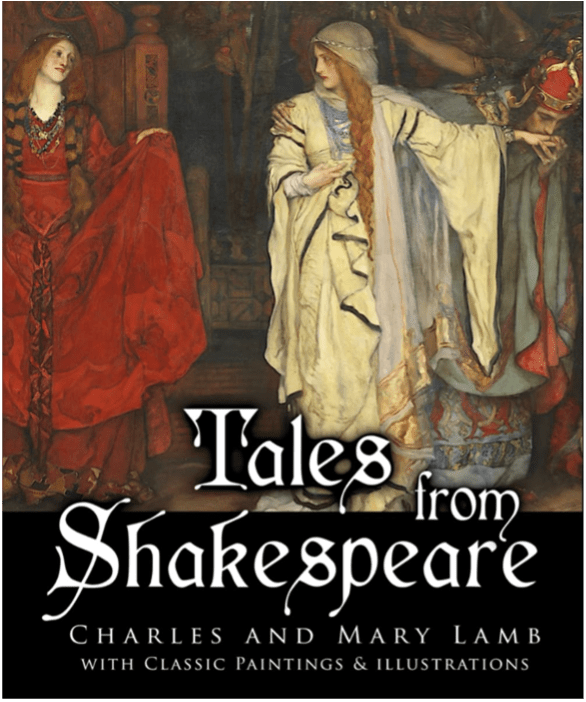
There are many works of art that correspond to literature as well; for example, quite a few artists have painted scenes or characters from Shakespeare. I recently bought a copy of Charles and Mary Lamb’s Tales from Shakespeare that includes numerous classic paintings corresponding to the plays in this volume. Any time you can find literature or history books that already include beautiful works of art, your children will benefit.

So don’t put away the art prints once children are in middle school or high school. Even adults benefit from them! Go ahead and post some of them in your classroom, perhaps some that go with the history or literature you are studying. 

Please note that as an Amazon Associate, I earn from qualifying purchases.

Books About Artists  

Enjoying art prints in the classroom or at home is only one way of acquainting children with beautiful art. Books about artists are another way to introduce children to art. Quite a few books about famous artists have been written for children, some for very young children that allow them to “touch” and “feel” the art. Here are a couple of examples, if you would like to look them up. (These are books for very young children).

Touch the Art: Make Van Gogh’s Bed

Touch the Art: Count Monet’s Lilies

Please note that as an Amazon Associate, I earn from qualifying purchases.

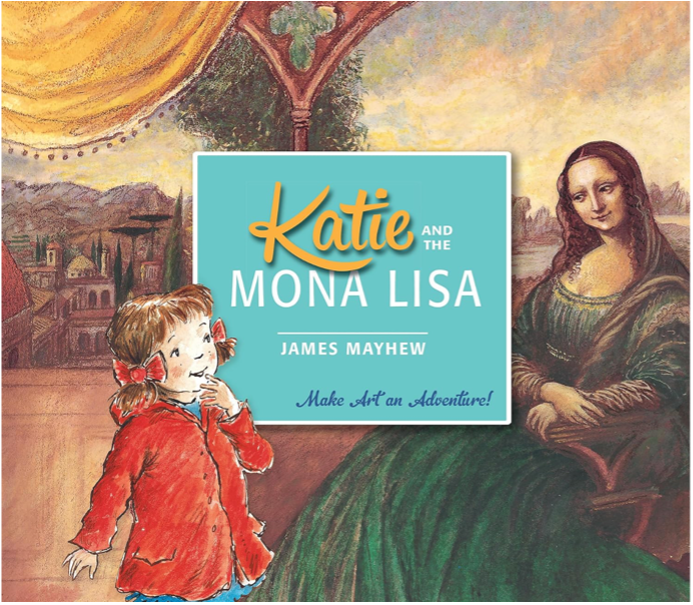
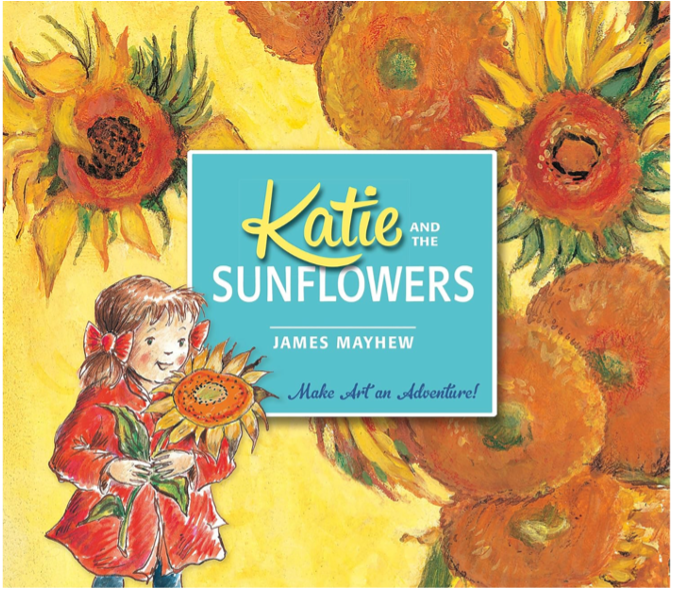
When my children were young, they loved the Katie series of books. I still have these books, as I’ve never been able to part with them. I’ve listed some of them below, if you would like to look them up. In the Katie books, Katie goes to the art museum with her grandmother and then hops right inside the paintings and runs around with the art characters while her grandmother dozes on the bench. After she finishes with her adventures, she and her grandmother go home together. These books are delightful, with beautiful illustrations, and children learn so much from them about famous artists and their art.

Katie and the Mona Lisa, by James Mayhew

Katie Meets the Impressionists, by James Mayhew

Katie and the Sunflowers, by James Mathew

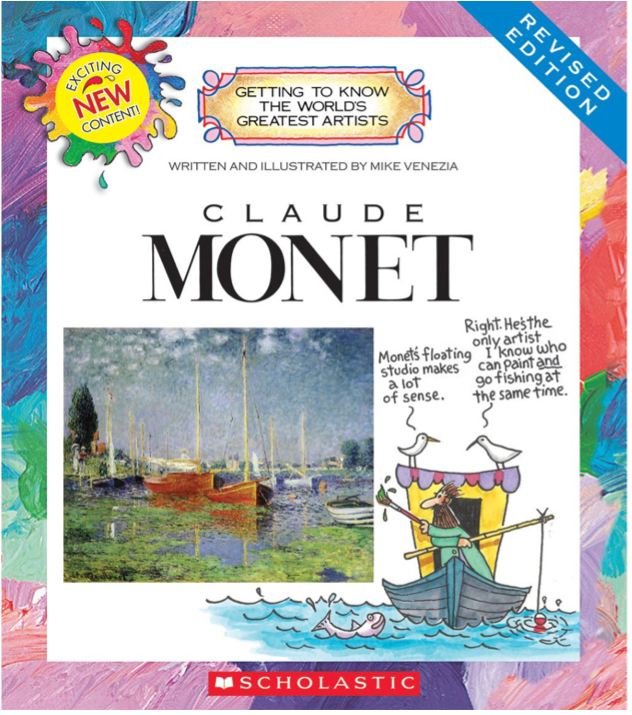
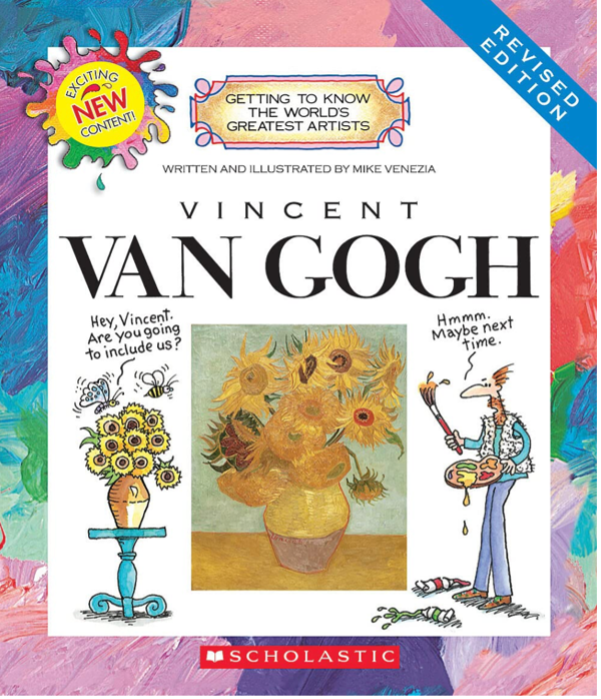
Older children (3rd – 6th grades) may enjoy the Getting to Know the World’s Greatest Artists series by Mike Venezia. His books are funny yet informative, and the reader tends to learn quite a lot about each artist. He includes information as well as cartoon commentary about each artist, along with examples of the artist’s work. My children loved these as well. I have listed a couple of them below:

Claude Monet, by Mike Venezia

Vincent Van Gogh, by Mike Venezia

Please note that as an Amazon Associate, I earn from qualifying purchases.

Books about Art History

Art history is a little different from art appreciation. In art history, children learn about the progression through history of different types of art, and as a result, develop a deeper and more mature understanding of painting, sculpture, and architecture. We used some older books that were written by Vergil Hillyer, the first headmaster of Calvert School, called A Child’s History of Art. They were designed to be used in middle school, for 5th, 6th, and 7th graders – one for each grade. I’ve listed them here, just in case you’d like to look them up, as they are out of print – A Child’s History of Art: Painting; A Child’s History of Art: Sculpture; A Child’s History of Art: Architecture               

We had so much fun with these books, learning about Greek columns in sculpture and flying buttresses in medieval architecture, and all kinds of things in between. However, there are many other books that can be used to teach art history, which you can find by perusing some of the classical Christian education catalogs.  

Artist Books

This third method is similar to the first and second methods, but in this case, you can just buy an entire book full of art prints, either of a particular artist or maybe a school of art. You can enjoy the book as is or you can pull the pages that you want to use out of the book and put them in a separate notebook or mount them on poster board, essentially creating your own art prints. This method can be a great way to collect the art you like, and some of these books are quite inexpensive.

Remember, have fun as you and your children engage with beautiful art!

Teaching Kids Long Vowels Without Expensive Curriculum

In a couple of earlier posts, I posted videos that explain the process of teaching children how to read. Teaching children the relationship between letters and sounds is a fairly simple process, and once they are mature enough to understand how to put letters and sounds together, they can begin to read. It is not really necessary to buy expensive curriculum in order to teach children how to read. Sometimes curriculum comes in handy and sometimes it makes things more complicated. But if you watch my videos, you will see some simple steps to follow that will help you get started.

This latest video shows you how to introduce “long” vowels to your child. The earlier videos dealt with “short” vowels, but once your child is comfortable reading words with short vowels, you can move on to long vowels. We introduce short vowels to children first because the words are shorter – usually just 3 letters – so reading is simpler for the child. 

Reading words with long vowels is just as easy once your child has mastered the short vowels. I have included a book suggestion below called Classical Phonics because it includes lists of words with long vowels, plus it has a lot of other useful information that may come in handy.

In addition, I have listed a couple of other helpful resources, including a book with stories that your child can read to you for practice with both short vowels and long vowels.

Please note that as an Amazon associate, I earn from qualifying purchases.

Classical Phonics, by Cheryl Lowe

Explode the Code 3, pub. by Educators Publishing Service      These books are fantastic, allowing children to practicing reading/phonics skills as well as handwriting. They use a variety of practice activities and review.

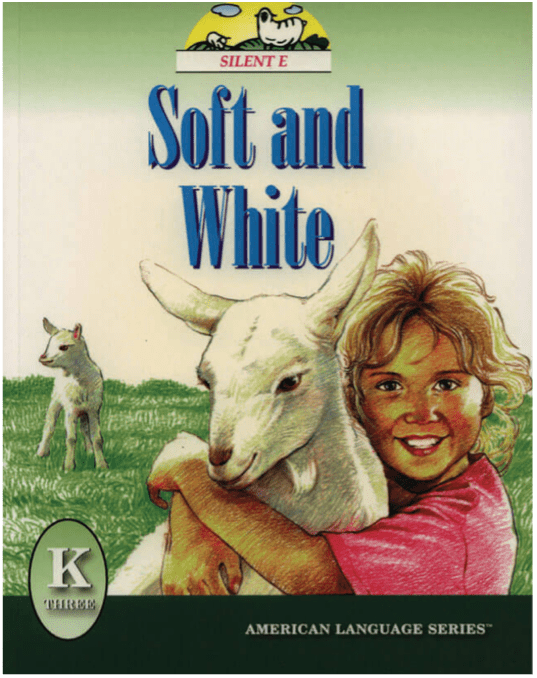
Soft and White An illustrated reader that allows children to practice reading long-vowel words ending in silent e.

Best Books for Boys: A Guide to Classic Literature

Pictured: The Trumpet of the Swan, a great book for boys

In an earlier post, I mentioned that I would let you know what some of the books were that I found for my son to read as he was growing up. This list is not meant to be in any way comprehensive; these are just some random thoughts and suggestions based on what we found and liked.

I used to pore over catalogs from various publishers looking for book suggestions; then I would find as many books from the library as I could and buy our favorites. I encourage you to do the same, as a number of Christian and/or classical companies have wonderful books listed in their catalogs.

If you like, you can follow the links to Amazon for some of these books, or you may want to order from companies that sell classical or homeschool curriculum.

Please note that as an Amazon Associate, I earn from qualifying purchases made through any of my amazon links. 

Younger Ages

Nursery Rhymes (Mother Goose/traditional nursery rhymes) Children love the rhythm of nursery rhymes and love to hear them over and over.

Bible stories (We used different ones over the years for different ages.)

A Child’s Garden of Verses, by Robert Louis Stevenson

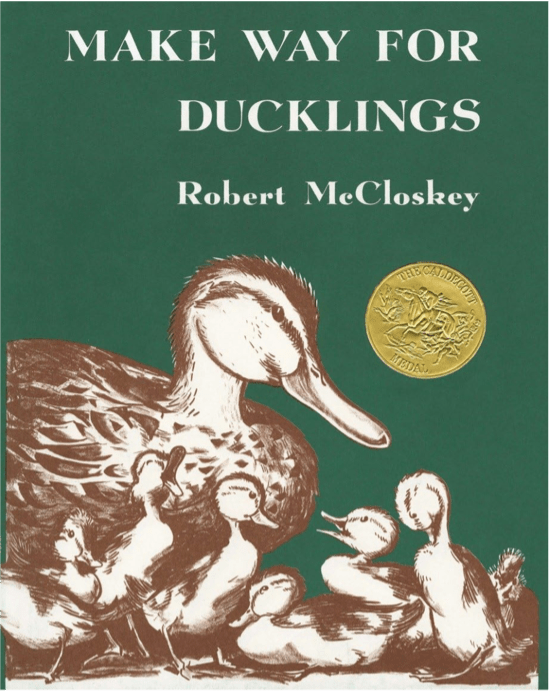
Make Way for Ducklings, by Robert McCloskey

Blueberries for Sal, by Robert McCloskey

These two books by Robert McCloskey are charming, nostalgic, and engaging.

Henry and Mudge books, by Cynthia Rylant (Delightful and wholesome easy readers)

Frog and Toad books, by Arnold Lobel (More delightful and wholesome easy readers)

There are many other delightful classic stories for younger children; these are just a few that stand out in my mind for their charm.

Older Ages (3rd, 4th, 5th Grades and up)

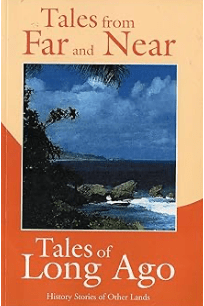
Tales from Far and Near and Tales of Long Ago, ed. by Arthur Guy Terry (Classic stories from history and legends)

Famous Legends, by Emeline Crommelin (Includes legends such as King Arthur, William Tell, Robin Hood, Roland, etc.)

Mighty Men, by Eleanor Farjeon (Stories of ancient heroes. Out of print, but you may find it used.)

Please note that as an Amazon Associate, I earn from qualifying purchases made through any of my amazon links. 

Saint George and the Dragon, by Margaret Hodges (My son loved this!)

The Story of Rolf and the Viking Bow, by Allen French (Set in the early days of Christianity in Iceland.) My son renamed this book “Rolf and the Lawsuits.” Apparently, the Vikings had quite a detailed and comprehensive system of legal regulations, which resulted in multiple lawsuits being filed during the course of the story!

King Arthur and His Knights, compiled and arranged by Elizabeth Lodor Merchant, based on Sir Thomas Malory’s Morte d’Arthur

         We loved this version of King Arthur; it has been beautifully rewritten for children. My son first encountered the code of chivalry as he was reading this book. This particular version of King Arthur is out of print, so be sure the version you find is appropriate for children. 

Tales from Shakespeare, by Charles and Mary Lamb

I was first introduced to Shakespeare while reading the copy of this book that my parents had on their bookshelf. Someone had given them a set of books compiled especially for children, and this was one of them. They were beautiful gold books with gold leaf pages, and after I read the Shakespeare plays that were retold in this book, I couldn’t wait to read the real Shakespeare plays for myself. I remember reading Othello and King Lear over and over. And when I encountered Shakespeare later, I loved it as much as I thought I would. 

Favorite Greek Myths, by Mary Pope Osborne

I love this particular children’s version of the Greek myths. They are written like fairy tales, and the illustrations are enchanting. We used this book in 3rd grade.

Theras and his Town, by Carolyn Snedeker

Your child will meet a boy from ancient Greece and begin to understand what life was like in Athens and Sparta.

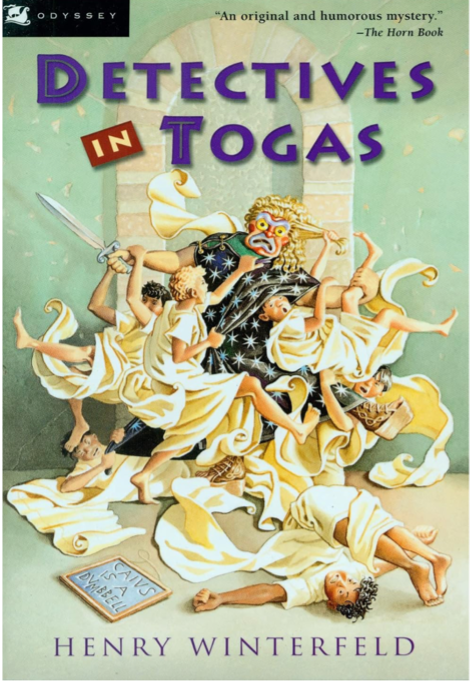
Detectives in Togas  (A fast-moving detective story set in ancient Rome)

The Chronicles of Narnia, by C. S. Lewis (These 7 books are classics, ever-engaging and timeless.)

The Adventures of Tom Sawyer, by Mark Twain (My son loved Tom Sawyer; what boy wouldn’t?)

The Childhood of Famous Americans series 

First printed in the 1930s, now back in print. A great way to introduce children, especially boys, to famous Americans! I loved these myself when I was a child. They can be found online on various websites. I have included one Amazon link:   Benjamin Franklin, Young Printer

Johnny Tremain, by Esther Forbes (A story set in the Boston colonies.)

The Magna Charta, by James Daugherty (Fascinating story of the forerunner of America’s Bill of Rights)

And last, but not least, The Trumpet of the Swan, by E. B. White, pictured above. I thought this book was delightful.

Fill your bookshelf with children’s classics and encourage your children to read. Thanks to the books my parents had on their bookshelf when I was a child, I read some wonderful children’s classics which gave me a taste for beautiful literature and a longing for more. 

Note on book lists: If you find a book in a 1st grade book list, don’t worry that your child is behind if he isn’t ready to read the book until 2nd or even 3rd grade. Children mature at different rates; the important thing is that your child learn to read and learn to enjoy books. And some book lists are pretty advanced. Take your time and let your child enjoy easy books while developing a love for reading.

How Do We Teach Virtue in Classical Education?

Before wading into a discussion about curriculum, I would like to talk about why anyone would be interested in pursuing classical education in the first place. And what in the world do we mean by “classical” when it comes to education? What is classical Christian education? Does virtue have anything to do with it?

One of the main reasons I was drawn to classical education was its emphasis on virtue. We can talk later about exactly what classical education is, but if we talk about virtue, we will understand classical education better.

The Transcendental Virtues

In my first post on classical education, I mentioned that I was looking for a certain “flavor” in the type of education that I wanted to give my children. Since opinions differ about the exact definition of classical education, I will just begin by telling you what I think of when I think about classical education. I wanted my children to have an education that instilled in them a love for the good, the true, and the beautiful – what I have now learned are considered the transcendental virtues. Traditionally, this type of education was called a classical education and focused on the history and culture of Western Civilization, which was the civilization which developed around the Mediterranean Sea – the civilization of the Greeks and the Romans. Why was this civilization so important? Because this was the culture in which God prepared the world for the coming of Christ and the culture in which Christianity spread after Christ came. Children heard and read the stories of the ancient Greeks and Romans, whose cultures emphasized virtue, even though they were pagan. They learned about the birth, death, and resurrection of Christ, the spread of Christianity throughout the Roman Empire, and the fulfillment of goodness, truth, and beauty in Christ, who is the Truth. They were exposed to stories of heroism and courage as they grew up, and these stories helped children to internalize the virtues. These “classic” stories were just part of a typical education.

All of this is not exactly a definition of classical education, but it leads back to my first question: Why would anyone be interested in pursuing a classical education? Why would parents want this type of education for their children? One of the main reasons is that this type of education has historically focused on the transmission of virtue. And that is my question for today: How can we teach virtue? And how does a classical education help us in this pursuit? 

We Must Teach Children to Love Virtue

Teaching virtue is not the same as teaching children the difference between right and wrong. We need to teach children that some things are right and others are wrong, but we can’t stop there. We must teach them to love virtue. We need to figure out how to help them to want to do what is right, even to their own hurt (even if doing what is right results in their own suffering). They need to internalize virtues such as courage and heroism. And one of the best ways of communicating virtue is by giving our children heroes – whether from history or from legends or fairy tales. Classical educators have known for years that if children are given the right stories to read, that they will identify with the hero and internalize the values of that hero. And in the literature of Western Civilization, which is based on Christianity, the hero is typically a Christ-figure. 

This idea of finding heroes in literature has been around for a long time. When I had a son, I started looking for ideas for educating him (since I had never been a boy and didn’t think I knew much about them). In my reading, I came across the idea that reading the right stories to a boy when he is young and giving him the right stories to read as he gets older was one of the best ways of teaching virtue. So I set out to find some of those stories for my son. In a future post, I will list some of the books that I gave him to read over the years. 

I had to work hard to find good books for my son to read since I had spent my childhood reading books that were geared more towards girls. However, once I started finding books for him, I found that there was a good bit of overlap, and I thoroughly enjoyed the books that I found for my son. 

Fairy Tales and Mighty Men

Please note that as an Amazon Associate, I earn from qualifying purchases made through any of my amazon links.

Both Tolkien and Chesterton have written essays on the importance of fairy tales. When I was a child, I found the Name That Color fairy books in my elementary school library and read them all (until they ran out of colors). I read The Blue Fairy BookThe Red Fairy BookThe Pink Fairy BookThe Green Fairy Book, and on down the line. I loved those stories. Fairy tales are actually a wonderful way for children to find heroes. As a result of identifying with the heroes (or heroines) in the stories, they want to emulate their virtues; I know I did. I went through my childhood imagining that I was a princess in a fairy tale, but I had learned from fairy tales that princesses had to behave in a certain way, so I (at times) tried to behave as a princess should.

Calvert School, which I discussed in my last post, used several books which taught children about heroes from classic literature. They even had a book called Mighty Men, which was used in the 4th grade course. I remember that some of the “mighty men” were not even men! One was actually Queen Esther, whose story is told in the Bible, and who was quite the heroine. Her famous line, “for such a time as this,” has inspired courage in many, both men and women.

Knowledge without Virtue Can Be Dangerous

These are just a few examples of how children find heroes by reading the right stories. An education purely for the sake of knowledge is incomplete. In fact, knowledge without virtue can be dangerous. Think about the world wars we have experienced and the ways that men – men with great knowledge but without virtue – used that knowledge to perpetuate great evils. Education is about more than conveying knowledge. It must also be about instilling virtue, and a classical Christian education is uniquely suited to that end. We don’t want to bring up children who are given knowledge without virtue, but at the same time, we shouldn’t try to teach virtue without knowledge. I’m not sure that is even possible. A truly educated person is one who has both. 

What I Learned When I Started Homeschooling

I mentioned in my first post about classical education that I originally chose the curriculum from Calvert School to use with my children. I’m sure many of you have never heard of Calvert School, as their homeschooling program does not exist any longer. When I began homeschooling, there were not many resources for teaching children at home. Curriculum packages were available from a couple of evangelical Christian publishing houses, but after I looked at the available materials, I was disappointed. Then I looked at Calvert School. I had heard of it because before homeschooling was a “thing,” Calvert School had developed a home education program which was primarily used by missionaries and diplomats who lived overseas, as well as by children who were too ill to attend school. This program had a “flavor” which I loved.

Calvert’s focus at this time was on the history and culture of Western civilization, and they included classic stories in both history and literature which ensured that children were introduced to many of these famous characters and legends (William Tell, King Canute, Xerxes, Alexander the Great, for example). I was impressed that Calvert introduced these stories to children when they were young and thus, when they would read about them later in their schooling, they would not be meeting them for the first time. Calvert also included stories of historical people who turned to Christianity from paganism, stories which I learned about for the first time when using Calvert. Even though the curriculum was not specifically Christian, per se, the stories of Christian heroes were allowed to speak for themselves. In Calvert’s original Kindergarten program, Christian hymns were even included on the music tape that we listened to when we sang along.

A Child’s History of the World

My favorite thing about the Calvert curriculum was the history book that was used in their 4thgrade course: A Child’s History of the World, written by the first headmaster of Calvert School, Virgil Hillyer. This book was a masterpiece, in my opinion. Students in the 4th grade home education program would be guided through the entire history of the world in one year, and other than the first two chapters of the book, which were a bit evolutionary, it was a delightful introduction to world history. Each chapter was written like a charming story – sometimes more like a fairy tale – and there were no questions or assignments in the actual book. A child who used the book as Calvert intended would be amazingly well-versed in world history at a surprisingly young age and would be well-prepared for high school studies. (I learned an astonishing amount of world history myself while studying it with my children and decided as a result that one of the best ways for adults to learn history is by reading children’s books on the topic – but that is a topic for another day.)

Classical Yet Gentle; Academically Excellent

The emphasis on the history and culture of Western civilization, even to the point of including art appreciation and music appreciation materials; the emphasis on writing compositions (which began in 3rd grade); and the strong academic focus of the curriculum were aspects that contributed to the classical flavor of Calvert School, even though at the time I did not know what classical education was. I could see, however, that this type of education differed from the traditional flavor of education provided by the evangelical Christian publishers whose materials I had looked at and even tried. I loved the fact that when my daughter read a story in A Child’s History of the World, that she would be asked simply to narrate the story back to me orally. Then we were instructed to make vocabulary cards for each story with a few specific words and dates included. At the end of each week, we would review these words and dates, including the preceding words that we had done. Because of this constant review, by the end of the year, my daughter remembered most of the vocabulary and dates from the entire year!

Calvert included basically no busywork. After reading a selection in literature or history, children could answer questions orally or narrate back what they had read. They typically did not have to answer numerous questions in writing. Writing was handled by planning and writing compositions on a regular basis. The compositions were on different topics, but my children often chose to write theirs on the history stories they were reading, which helped to cement the stories in their memory.
I recently looked up Calvert School and found that they no longer have a home education program. The private school still exists in Baltimore, but I believe their home education program has been sold. Modern homeschooling has resulted in a plethora of materials and has blessed many of us, but I am grateful that I was able to use Calvert materials while they were still around. I learned many things about teaching my children from their teacher’s manuals, which were invaluable. Those manuals were very detailed and guided the instructor (usually mom) so that no time was wasted, no busywork was included, and everything was well reviewed. From those manuals, I learned that homeschooling should not take more than 3 to 4 hours a day; I learned how to review using vocabulary; I learned the importance of narration, whether oral or written; and I learned how to provide my children with a strong academic foundation in a reasonable amount of time. I learned a lot about classical education without realizing it.

What Now?

The question now is: How can we provide this type of education to our children using the materials that are out there? Is there a similar program available today? Stay tuned for more.

What does classical homeschooling look like?

I am writing from the standpoint of someone who began a journey years ago with a longing to give my children a classical Christian education. When I began this journey, I did not really know what that looked like. Before I even began “homeschooling,” when my oldest daughter was 4, I wanted to work with her and expose her to stories of Christianity that were beautiful and inspiring, but I did not know where to find materials. I stumbled across a publication that I was able to subscribe to on a monthly basis that included stories, recipes, and crafts for children of different ages. I was struck by the fact that the history stories were not about Christians that lived during the last 200 years or more recently, but rather about Christians who lived long ago, such as St. Patrick, who lived just a few hundred years after Christ. I think I was longing for a specific “flavor” of beauty, a flavor I found as we read the stories and worked on the crafts. This publication does not seem to be in existence any longer, but as I began educating my oldest daughter at home, I began looking for materials that seemed to fit this pattern of truth and beauty and that included Christianity as part of history. I didn’t really know what it was called, because at this time, even most private and Catholic schools had ceased to be classical and had become fairly progressive.

I eventually chose Calvert School as my homeschool curriculum; I had known about Calvert School for a long time, as it had a well-established home education program that had been used by diplomats and missionaries back when homeschooling wasn’t a thing. We first used the 4th grade program and loved it. Calvert School was criticized by some as not being Christian, but the curriculum included many stories of Christians throughout history and presented the conversion of kings and emperors in a positive light. I had never been exposed to many of these stories and learned more than my daughter. The Calvert education satisfied my longing for an education that emphasized goodness, truth, and beauty. We learned about Greek columns (beautiful!), read beautiful poetry, and enjoyed many lovely stories from literature and history. I am grateful for the Calvert curriculum and continued to use different grades with different children. The Calvert manual itself provided an education in teaching and benefited me greatly.

As time went by, I began enjoying organizing and putting together my own curriculum, using products from different publishers or writing my own. The Calvert curriculum had given me the confidence to do that and had helped immensely with knowing how much time should be spent each day and on each subject. I scheduled our days so that we started every day at 9:00 AM and were done by noon or 1:00. There was no busywork and very little wasted time, so it was entirely possible to have a 3 – 4 hour day.

In future posts, I will tell more of my story and discuss things like scheduling and planning for different ages.

Athens and Sparta

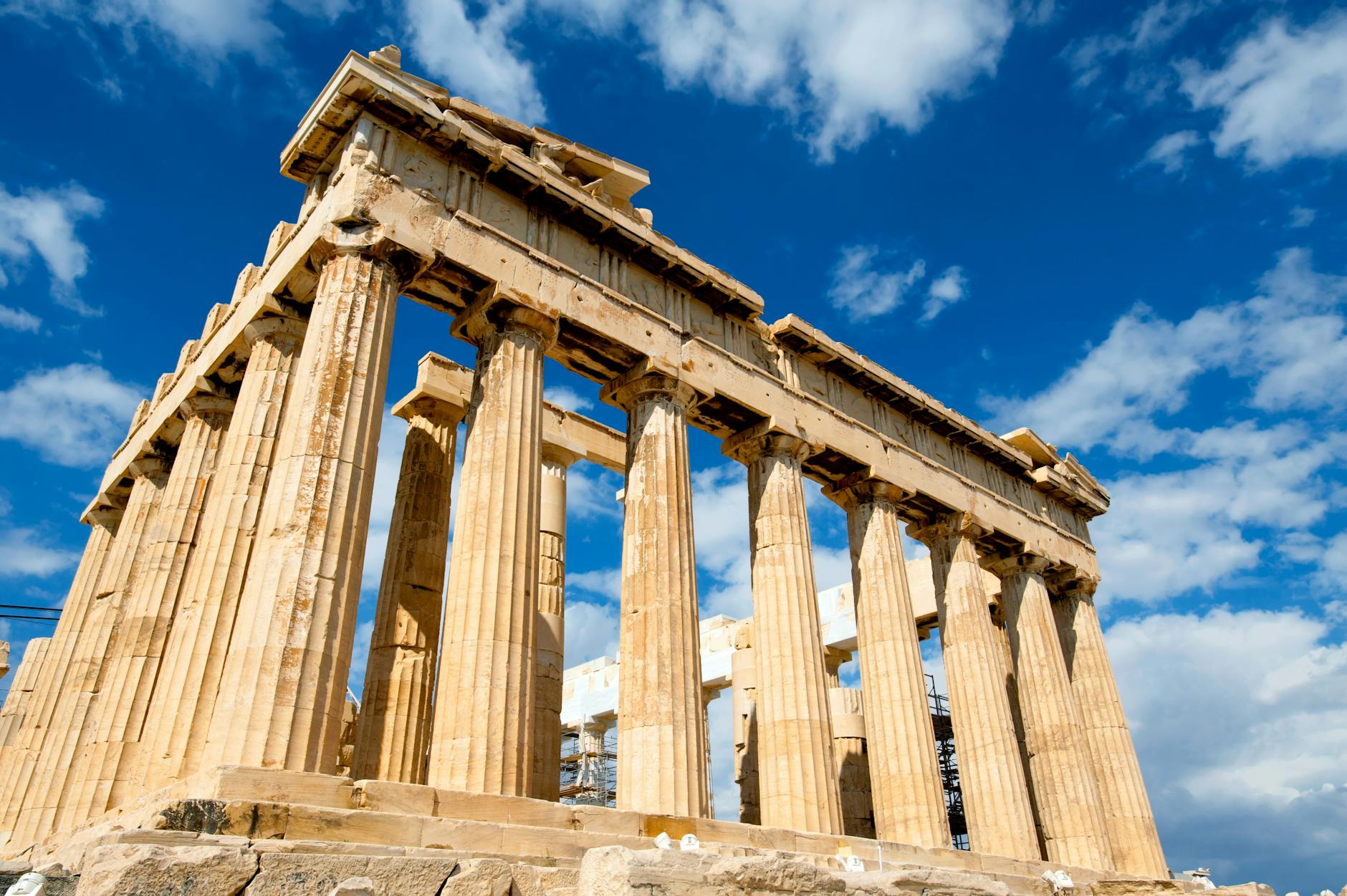
If we are going to talk about ancient Greece, we need to talk about Athens and Sparta because they were the most important cities in ancient Greece for years and years. Athens and Sparta were both founded many years before Christ (BC), but they were very different. The people in Athens loved beautiful things – beautiful buildings, beautiful statues, beautiful pottery, as well as beautiful ideas. You can still see some of their buildings today if you go to the modern city of Athens, which I have done. One of their oldest buildings which is still standing today is a temple called the Parthenon (Par-the-non), which they built in honor of the Greek goddess of wisdom, Athena. The Parthenon was a very important building because Athena was their main goddess, and they had named their city, Athens, after her. They put a very large statue of Athena in this temple – it was 40 feet tall, which is as tall as seven tall men standing on each other’s heads! Try to imagine that!

The Parthenon in Athens, Greece

Anyway, this statue is no longer standing in the original Parthenon in Athens, but if you want to see what it looked like, you might try visiting the replica of the Parthenon in Nashville, Tennessee. But even though the Parthenon in Athens, Greece is so old that it is crumbling and falling apart, it is still considered by many to be one of the most beautiful buildings in the world. The Parthenon stands on a hill called the Acropolis (a-crop-o-lis) along with a few other very lovely buildings which are also crumbling.

Athens flourished and prospered during a period of time call the Golden Age of Greece, from about 480 BC – 404 BC. (BC stands for “before Christ.”) A man named Pericles (pear-a-klees) was the ruler of Athens during its golden age, and he is still famous today because he did such a good job governing Athens during this time. 

Even though the Athenians loved art, beauty, and ideas, they also believed it was important to have strong bodies and to exercise. They had gymnasiums in the city of Athens so that the men could gather, have conversations, and practice wrestling and running. The people of Athens believed in being what we call today “well-rounded.” 

Now Sparta was quite a long way from Athens and had a completely different culture. A man named Lycurgus (lie-kér-gus) was the leader of Sparta, but his ideas were very different from those of Pericles in Athens. Lycurgus believed the most important thing was to be strong and to be ready to fight, so he made some rules that everyone in Sparta had to follow. As you read these rules, think about whether you would have liked them.

All babies, when they were born, were allowed to live only if they were healthy and strong. If they were sickly, they were left on a mountainside to die. Then, when little boys had their 7th birthday, they had to leave their mothers and go live in another place, sort of like a camp. In this “camp,” they were taught how to get along without enough food and how to go on long hikes in cold weather with only a thin coat. They were not allowed to sleep in soft beds, and they were even whipped from time to time for no reason other than to teach them to accept harsh punishments without complaint. All Spartan boys had to learn to be good soldiers. 

The Spartans did not believe in spending their time making beautiful things or having lengthy discussions about ideas. In fact, the Spartans believed that the fewer words one used, the better. They were so good at saying things in just a few words that they became famous for speaking in a “laconic” way, because Sparta was in the part of Greece known as Laconia. One time a general who wanted to conquer Sparta sent a long message threatening to turn them out if he invaded. Do you know what answer the Spartans sent in reply? They sent a message with one word: “IF”. We still say that someone is speaking in a “laconic” way if he or she replies with few words.

Every four years the Greeks held their Olympic Games, which were begun in Greece 776 years before Christ (776 BC). Both Athens and Sparta sent men to compete in the games. Which city do you think took more prizes over the years? You’re right; Sparta! Interestingly, the Spartans were especially good at chariot races!

You have already read about the Peloponnesian Wars, which unfortunately brought the Golden Age of Greece to an end.

Words to remember: Athens, Sparta, Pericles, Parthenon, Lycurgus, laconic

More on Reading

In my first post on teaching reading, I provided a video to get you started with short vowel words – mainly words with three letters. 

In my next video, I will show you how you can introduce long vowels to your child. You will not want to do this until your child has had a lot of practice with short vowels and is comfortable reading sentences with short vowel words. 

I am listing some resources below that may come in handy for you and your child as you begin this adventure. They are all resources that I have used, both in a homeschool setting and in the classroom, and recommend highly.

Disclaimer: I have used all of the resources on this page and recommend them highly. I have used some of them in a homeschool setting and others in a classroom, and some in both. It is my desire to steer you towards high quality resources that will benefit you and make the task of teaching your child to read a pleasure, and that is my overarching purpose in listing these resources. However, please be advised that I do earn a small commission on any items that you purchase through the links on this page.

Classical Phonics, by Cheryl Lowe – This is an excellent resource which provides lists of words as explained in the video. (The book does not include sentences or stories.) This book is sold by Memoria Press, an excellent classical education publishing house.

Alphaphonics, by Samuel Blumenfeld – This book uses the same simple method, although it may progress a little quickly for young students. It has lists of words as well as many practice sentences. You can pick and choose which ones or how many you want to use. It is a classic, in my opinion.

Please note that as an Amazon Associate, I earn from qualifying purchases.

Explode the Code is an outstanding resource which includes a number of techniques to help your child learn to read, including visual discrimination, phonological awareness, and even handwriting and spelling.

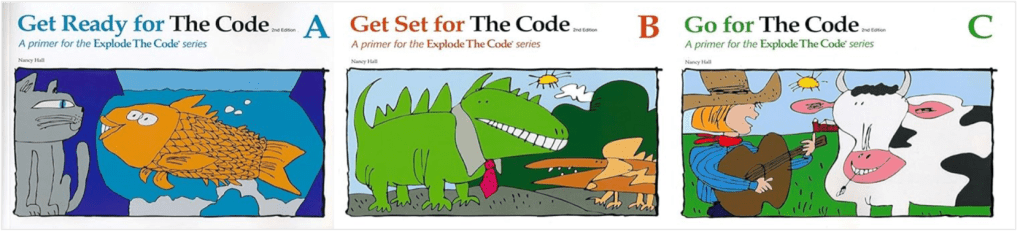
The following three books are pre-reading resources in the Explode the Code series and will help prepare your child for reading: Get Ready for The Code A, Get Set for The Code B, Go for the Code C

Please note that as an Amazon Associate, I earn from qualifying purchases.

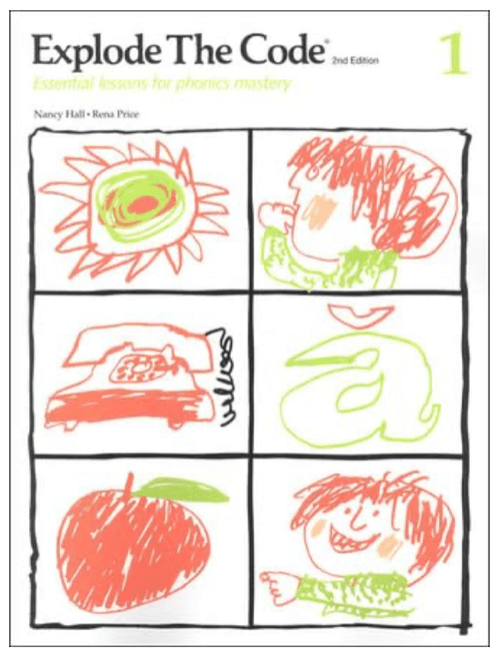
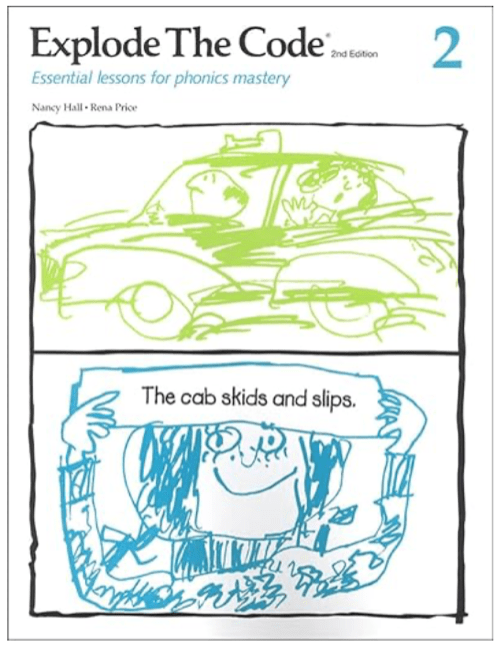
Explode the Code Books 1 and 2 are for learners who are ready to begin the reading process.

Explode the Code Book 1

Please note that as an Amazon Associate, I earn from qualifying purchases.

Explode the Code Book 2

Please note that as an Amazon Associate, I earn from qualifying purchases.

Beginning Readers: The following books are for beginning readers who are ready to read stories. They include stories composed mainly of short vowel words (CVC-consonant/vowel/consonant).

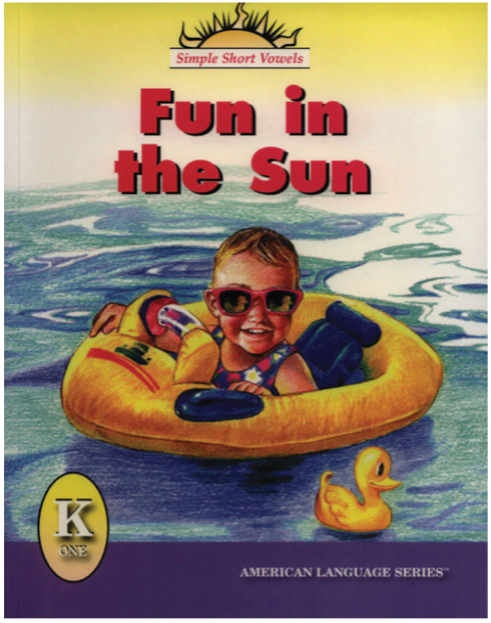
Fun in the Sun (sold by Memoria Press)

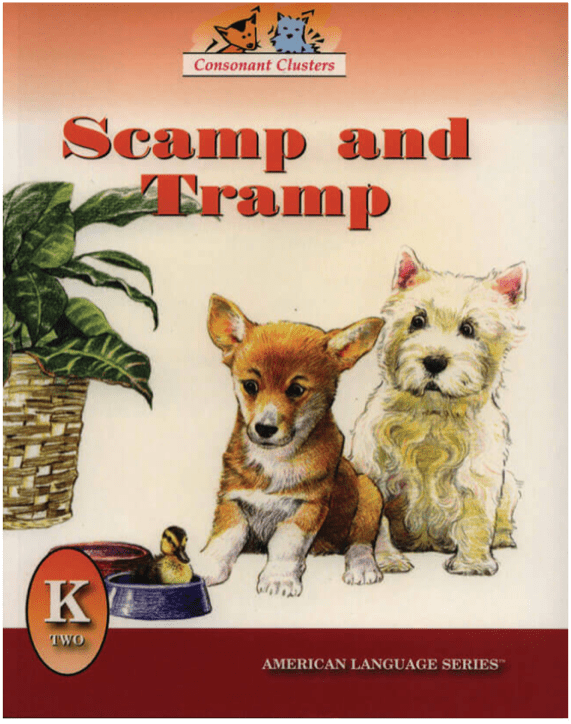
Scamp and Tramp (second book in the same beginning reading series, sold by Memoria Press)

In my next video, I will show you how you can introduce long vowels to your child. You will not want to do this until your child has had a lot of practice with short vowels and is comfortable reading sentences with short vowel words. Please enjoy the resources above until then!

The Ancient Greeks

LATEST STORIES

The Peloponnesian Wars

The Peloponnesian Wars (431-404 BC)

The ancient Greeks were a little bit like you and your brother and sister (or your best friend). They didn’t always get along. One time the Greeks in Athens and the Greeks in Sparta got mad at each other about something that seemed very important at the time. So they went to war. And they didn’t fight just one war. They fought two of them! Can you guess how long these wars lasted? 27 years!

These wars were called the Peloponnesian Wars because they were fought in the part of Greece called the Peloponnesus. It is easier to say if you break it up into two words: Pelopon Nesus.

The Spartans were better at fighting on land, and the Athenians were better at fighting on the sea, because Athens governed many islands which paid “tribute” or taxes, to Athens. But Sparta had to keep stopping to check on their slaves, and Athens had an outbreak of the plague which killed thousands of people, including Pericles, who had been the most important leader of Athens during its Golden Age.

Then a man named Lysander became the new Spartan general. Lysander figured out a way to defeat the Athenian navy and actually won a naval victory against the Athenians. Over 150 Athenian ships were destroyed in this battle, causing Athens to surrender to Sparta.

A man named Thucydides (Thoo-sid-i-dees), who was a general in the Athenian army, wrote a book about the Peloponnesian Wars called The History of the Peloponnesian War. His book is the main reason we know what happened. After Sparta defeated Athens, Greece was never the same. As a result, a man named Alexander was able to conquer Greece. We will talk about him later.

Lysander outside the walls of Athens; 19th century lithograph

I plan to add a story of the week below, suitable for all ages, so that we can learn the history of the world together, something which is essential for a classical education.